In the competitive landscape of steel production, alloy costs can represent 15-25% of total variable expenses. With ferro silicon (FeSi) prices oscillating between $1,200 and $1,400 per ton, the search for a cost-effective, high-performance alternative has never been more critical. Enter the Silicon Briquette—a revolutionary metallurgical product designed to replace FeSi, aluminum, and even silicon carbide (SiC) across ladle deoxidation, EAF cold charging, and LF slag reduction. This article provides production managers and procurement teams with the technical data, cost models, and implementation roadmap to evaluate this transformative cost-reduction opportunity, where a $600 product can outperform alloys costing twice as much.
What Are silicon briquette? Composition and Performance
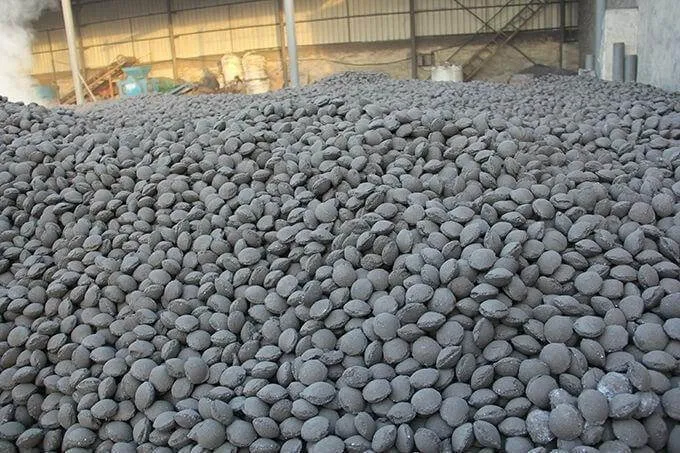
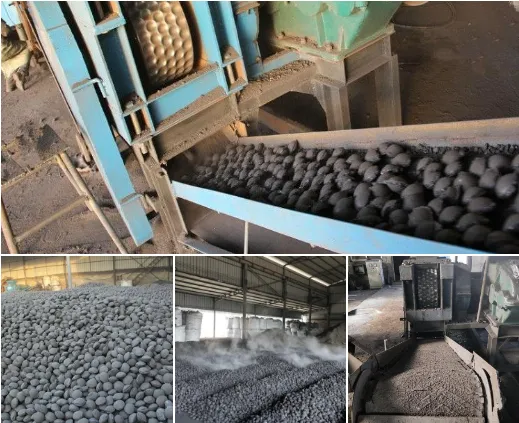
silicon briquette are engineered briquettes manufactured from high-purity silicon byproducts of the silicon industry. Using a proprietary inorganic binder system and specialized densification technology, these raw materials are compacted under extreme pressure into dense, pillow-shaped blocks measuring approximately 30 × 30 × 50mm. The result is a product that dissolves rapidly in molten steel, actively conditions slag, and delivers silicon at a fraction of the cost of conventional alloys.
Standard Chemical Specifications
| Element | Guaranteed Value | Typical Value | Design Advantage / Commentary |
|---|---|---|---|
| Effective Silicon (Si) | ≥ 70.0% | 70-75% | Primary deoxidizer — drives cost per effective Si |
| Total Iron (TFe) | ≤ 2.0% | ~1.1% | Ultra-low iron for maximum alloying flexibility |
| Calcium Oxide (CaO) | ~ 3.5% | 3.0-4.0% | Active slag builder — reduces lime consumption |
| Calcium Fluoride (CaF₂) | ~ 7.0% | 6.5-7.5% | Powerful fluxing agent — improves slag fluidity and desulfurization |
| Carbon (C) | ≤ 2.0% | ~1.3% | Controlled to avoid unwanted carburization |
| Sulfur (S) | ≤ 0.03% | < 0.02% | Stringent limits for clean steel production |
| Phosphorus (P) | ≤ 0.03% | < 0.02% | Low P ensures structural integrity of final steel |
| Moisture | < 1.0% | < 0.5% | Deeply dried — absolutely safe for addition to molten metal |
| Dimensions | 30×30×50mm | Pillow Shape | Optimized for slag penetration, dust-free charging |
| Bulk Density | ≥ 2.25 t/m³ | ~2.3 t/m³ | Ensures ball sinks through slag with tapping stream momentum |
| Crushing Strength | ≥ 1000 N/ball | > 1000 N | Exceptional strength — survives transportation and multi-handling |
Certified specifications for each batch are available upon request. Contact our technical team to discuss customizing the Si content or impurity levels for your specific steel grades.
Cost Comparison: Composite Ball vs Traditional Deoxidizers
The economic case is compelling: a product priced at $600/ton delivers silicon more cheaply than FeSi at $1,300/ton. The table below quantifies this advantage across the spectrum of common deoxidizers.
| Deoxidizer | Typical Price (USD/ton) | Si Content (%) | Effective Si Cost (USD/kg Si) | Deoxidation Efficiency | Additional Benefits / Notes |
|---|---|---|---|---|---|
| Silicon Briquette 70 | $600 | 70% | $0.86 | Excellent | Lowest cost; slag-friendly; multi-purpose (EAF/LF) |
| FeSi72 | $1,150–1,350 | 72% | $1.60–1.88 | Very Good | Established supply chain; higher purity for specialty steels |
| FeSi75 | $1,250–1,480 | 75% | $1.67–1.97 | Excellent | Premium grade; lower Al/Ca impurities |
| Aluminum shot | $2,300–2,800 | N/A (Al-based) | N/A | Excellent | Strongest but risk of SEN clogging; very high cost |
| Silicon Carbide (SiC 70) | $700–900 | ~50% effective Si | $1.40–1.80 | Moderate (Slag Only) | Diffusion deoxidation only; carbon pickup risk |
The cost advantage is clear and dramatic: composite balls deliver silicon at $0.86 per effective kg Si, roughly 50% less than FeSi72. For a 100-ton heat requiring a 0.10% silicon addition (100 kg Si), the alloy cost comparison is stark:
- FeSi72 (1300 USD/ton): 100 kg ÷ 72% ÷ 90% recovery = 154 kg alloy × $1.30/kg = $200 per heat
- Composite Ball 70 (600 USD/ton): 100 kg ÷ 70% ÷ 85% recovery = 168 kg alloy × $0.60/kg = $101 per heat
- Annual savings (40 heats/day, 330 days): (200 − 101) × 40 × 330 = $1,306,800 per year
Three Application Scenarios for Maximum Cost Reduction
The unique physico-chemical design of the Silicon Briquette unlocks value across three distinct operational scenarios. Its role changes in each, but the result is always a dramatic reduction in cost per ton of steel.
Scenario 1: EAF Cold Charging — Chemical Energy Replaces Electricity
This is the most profitable application. Mixed uniformly with scrap in the charging basket, the balls undergo an exothermic oxidation reaction (Si + O₂ → SiO₂) during meltdown. This chemical heat directly melts surrounding scrap, displacing expensive electrical energy.
- Energy Savings: 1 ton of balls can effectively replace ~1,800 kWh of electricity (at 30% thermal efficiency).
- Alloying: The excess silicon not consumed by oxidation is absorbed into the bath with >95% recovery, covering the required Si addition.
- Total Value per Ton of Balls: Equivalent to ~$1,100 in electricity + $3,300 in alloy savings, totaling over $4,300 in value against a $600 purchase cost.
Scenario 2: Ladle Addition During Tapping — Direct Alloy Replacement
Added into the tapping stream from the BOF/EAF, the high-density balls are carried deep into the steel bath by the momentum of the metal flow. This ensures rapid dissolution and high, stable silicon recovery of 85-90%. This is the direct, drop-in replacement for FeSi, delivering a >45% reduction in alloy costs per heat without any operational changes.
Scenario 3: LF Furnace Slag Reduction — Replacing SiC and Aluminum
This is a new, high-impact application. After the white slag is formed in the LF, the composite balls are scattered onto the slag surface. Here, they function as a superior diffusion deoxidizer:
- Strong Deoxidation: Silicon reacts with (FeO) in the slag faster and more effectively than SiC, lowering FeO content below 0.5% to maintain the white slag.
- No Carbon Pickup: Unlike SiC, the balls add zero carbon, making them ideal for low-carbon steel grades.
- Automatic Alloying: Excess Si diffuses into the bath, contributing to precise final chemistry trimming.
- Slag Optimization: The CaF₂ in the ball immediately improves slag fluidity, reducing the need for separate fluorspar and lowering the energy required for slag melting.
Addressing Core Concerns: Recovery, Density, and Strength
We understand that plant metallurgists may have concerns about the performance of a low-iron, low-density product. The following table details how our design ensures stable, high-performance results.
| Concern | Why It's a Problem | Our Engineered Solution | Operational Guidance |
|---|---|---|---|
| Low Density (2.25 vs 6.5 for FeSi) | Ball may float on slag and oxidize, destroying silicon recovery. | "Stream Momentum + Pillow Shape" Strategy. The pillow shape has lower drag than a sphere. When added directly into the high-velocity tapping stream, the kinetic energy of the steel carries the ball through the slag and deep into the bath. | Red Line Rule: Must be added during the early-to-middle of tap, directly into the stream impact zone. Never add to a stagnant slag surface (except in the dedicated LF slag reduction scenario). |
| Ball Breakage & Fines | Fines are lost to the dust extraction system, reducing yield and causing erratic recovery. | "High-Pressure Densification + Inorganic Ceramic Bond". Our proprietary binder system and 25+ MPa pressing create a product with >1000 N crushing strength. This resists breakage during transport, charging, and the thermal shock of immersion. | Store in a dry location. Inspect bags upon receipt. The balls can be charged via standard hoppers and conveyors. |
| Low Recovery in Initial Trials | If the first few heats show lower recovery, the trial might be stopped before the benefits are seen. | "Self-Correcting Economics". Even if initial recovery is a low 80%, the cost is so low that the heat remains profitable. Simply increase the addition pro-rata. An 80% recovery with this product is still cheaper than a 95% recovery with FeSi at double the price. | Start with 30% substitution. Measure recovery. Adjust addition weight as needed. This product gives you a massive financial buffer to optimize your process without losing money. |
Implementation Guide: A Phased Trial for Guaranteed Success
Transitioning to a new alloy should be a managed, data-driven process. We recommend a 3-day, step-wise trial to build confidence and establish plant-specific parameters. No capital expenditure is required. You use your existing alloy addition systems.
- Day 1 (10% Substitution): Replace 10% of your standard FeSi addition with the composite ball. Observe melting, any fume, and final silicon hit rate. This builds initial operator confidence.
- Day 2 (30% Substitution): Increase to 30%. Record detailed cost savings. In the EAF, begin tracking kWh/ton. In the LF, compare slag condition and desulfurization rates against your standard practice.
- Day 3 (50%+ Substitution): For BOF and LF applications, target a 50% replacement. In the EAF, you can trial a 100% replacement, fully capitalizing on the chemical energy benefit. Validate the full cost reduction potential and assess final steel quality (P, S, inclusions).
Conclusion
The Silicon Briquette is more than a simple FeSi substitute; it is a multi-functional metallurgical tool that revolutionizes cost management in the melt shop. It delivers silicon at half the cost per effective kilogram, provides its own flux to condition the slag, and, in the EAF, acts as a source of chemical energy that directly offsets electrical power consumption. With zero capital investment required and a robust, phased trial process, steelmakers can quickly and safely unlock savings of well over $2 per ton of liquid steel. For more information, to discuss a trial, or to get a customized cost model for your operation, contact Bright Alloys today.